Body Dissatisfaction, Importance of Appearance, and Body Appreciation in Men and Women Over the Lifespan
Quittkat et al. · 2019
UX Research · Product Design · Mobile App
Rethinking body image through self-compassion, reflection, and progress beyond appearance.
Solo design concept
Download Case Study (PDF)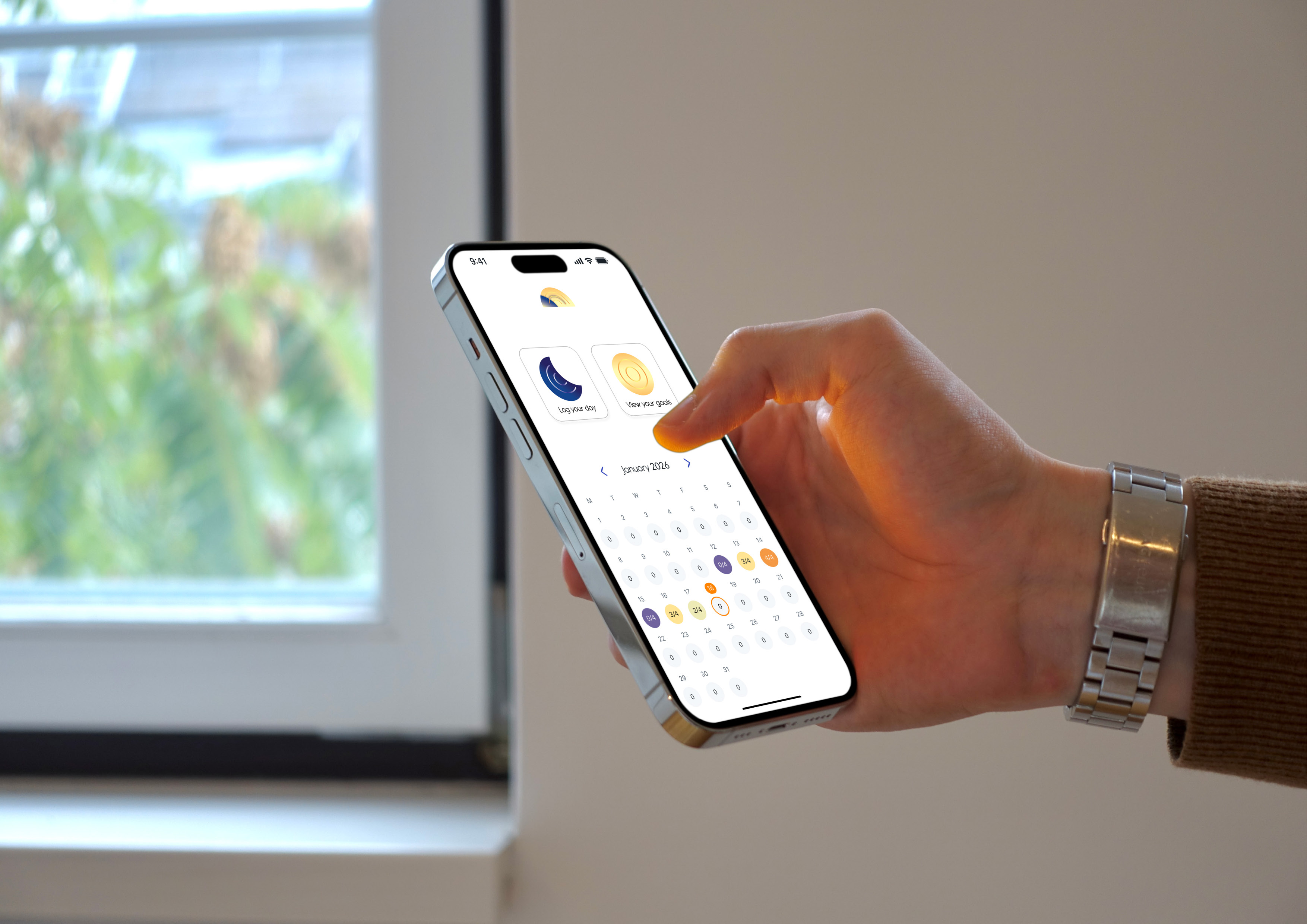
01 / Background
Messages like “everyone’s body is perfect in its own way” are common, but many, especially teens, continue to struggle with insecurity, comparison, and harsh self-talk about their bodies.
Instead of improving people’s relationship with their bodies, many existing tools and platforms reinforce appearance or weight. Over time, this focus shifts attention away from self-perception and emotional safety, leaving little space to reflect and appreciate our bodies.
This gap led to the idea for Cycle, a reflection-based app that focuses on reshaping mindset and body relationship rather than changing appearance, while still allowing room for personal goals.
02 / Research
Reviewing academic research and articles helped build an understanding of how body image and self-perception impact mental health and overall well-being.
Quittkat et al. · 2019
Merino et al. · 2024
Mental Health Foundation
National Eating Disorders Collaboration
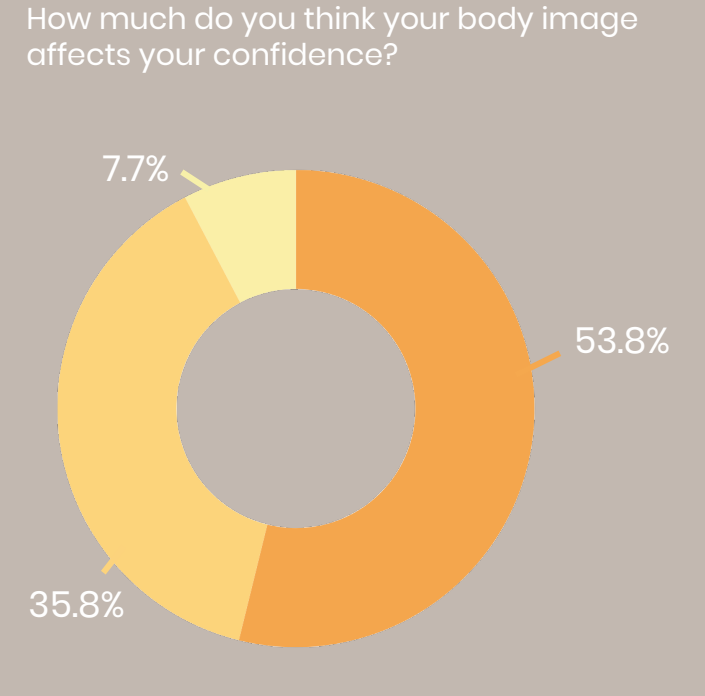
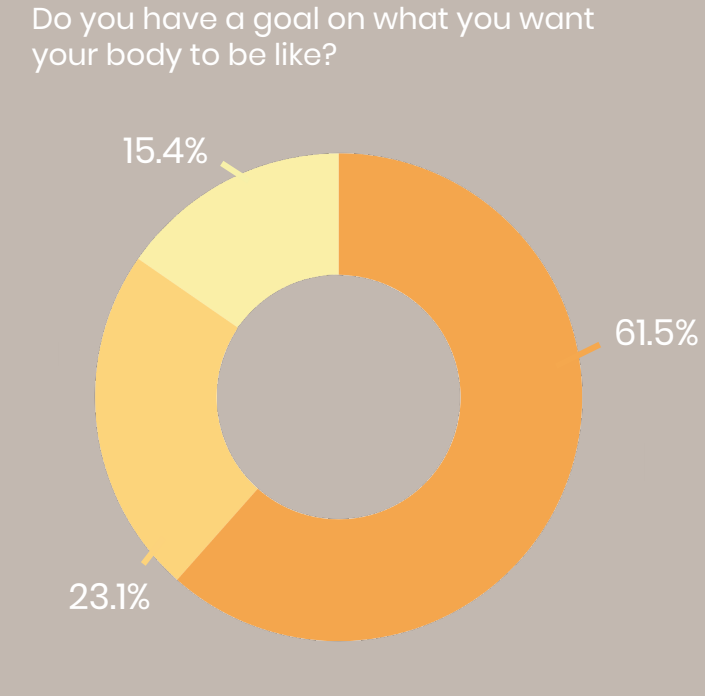
A survey focused on body image, confidence, and personal goals was conducted to gather quantitative data. The results helped identify patterns in mindset and self-perception, with two key findings highlighted below.
03 / Persona

Age: 18 · College student
She is addicted to social media apps like Instagram and follows many influencers who have her dream body. She often feels insecure about the way she looks and spends a lot of time getting ready before school to feel more confident about herself. She has made many attempts to follow a healthy diet but gave up or lost track of what she was eating.
Victoria is a persona that represents teens who experience body insecurity influenced by social media and comparison. Cycle addresses these challenges by promoting reflection and mindset shifts rather than appearance-based change.
04 / Findings & insights
38.5%
The largest group of participants identified themselves as the main source of body image pressure, more than friends, family, social media, or school.
92.3%
Reported that their body image affects their confidence moderately to very much, indicating strong internal influence.
76.9%
Said that seeing visible progress helps them feel more confident about their body.
61.5%
Have a clear goal for what they want their body to be like, suggesting that progress toward personal goals is closely tied to confidence.
53.8%
Felt unsure or in the middle about talking about their body image with others.
58.9%
Sometimes or often compare their body to others, indicating internalized concerns rather than open conversation.
How might we
How might we support individuals in building confidence through personal progress while creating a safe and low-pressure space for reflecting on body image experiences?
05 / Key design decision 01
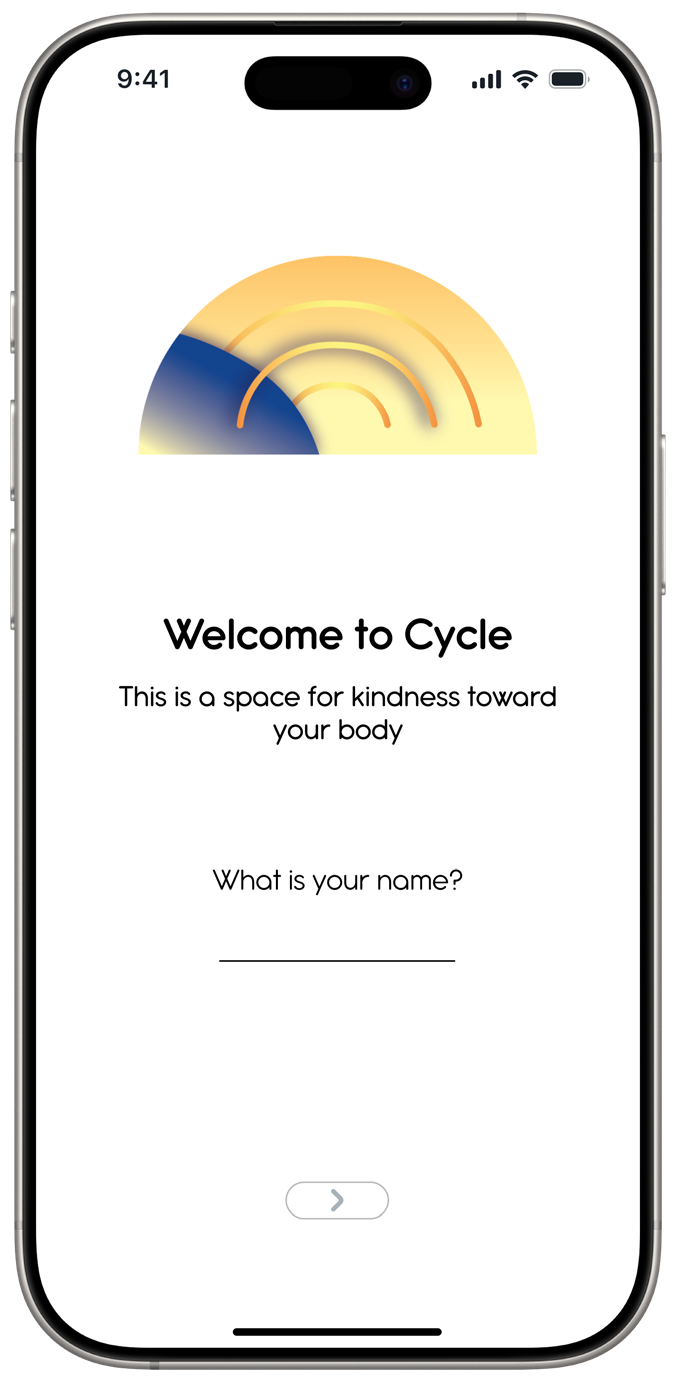
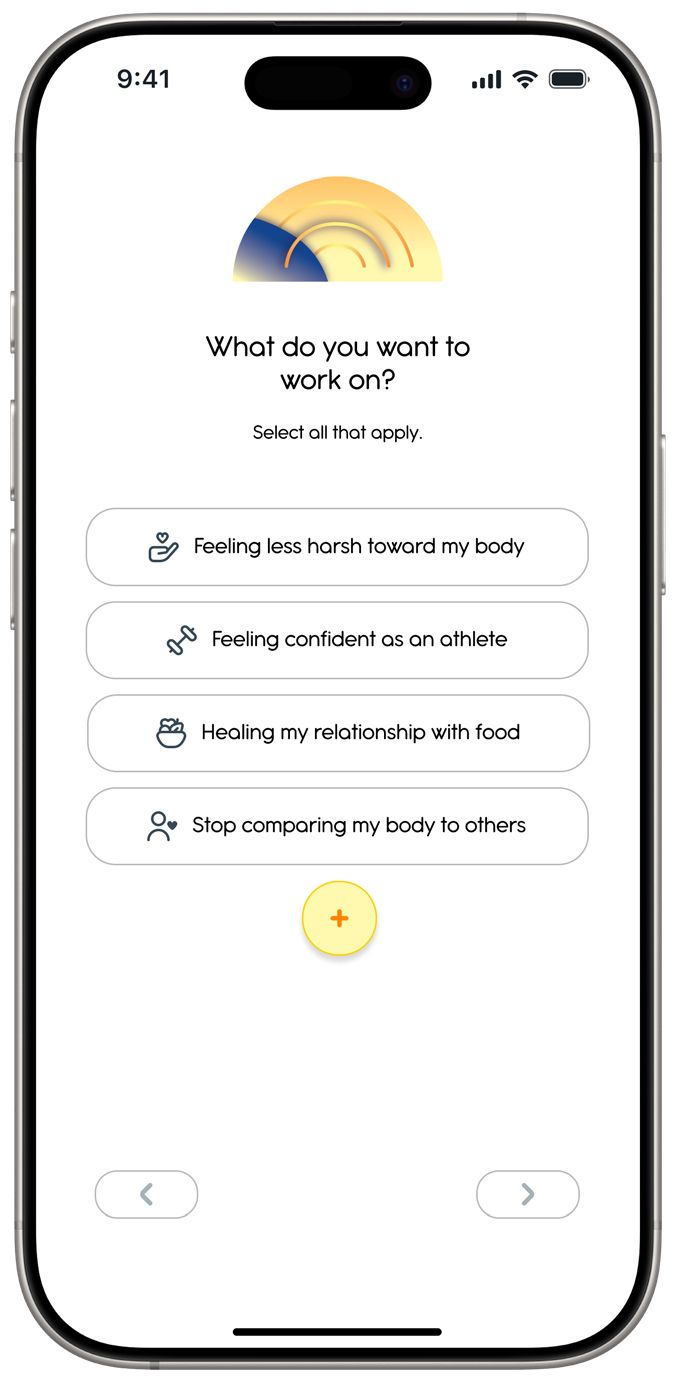
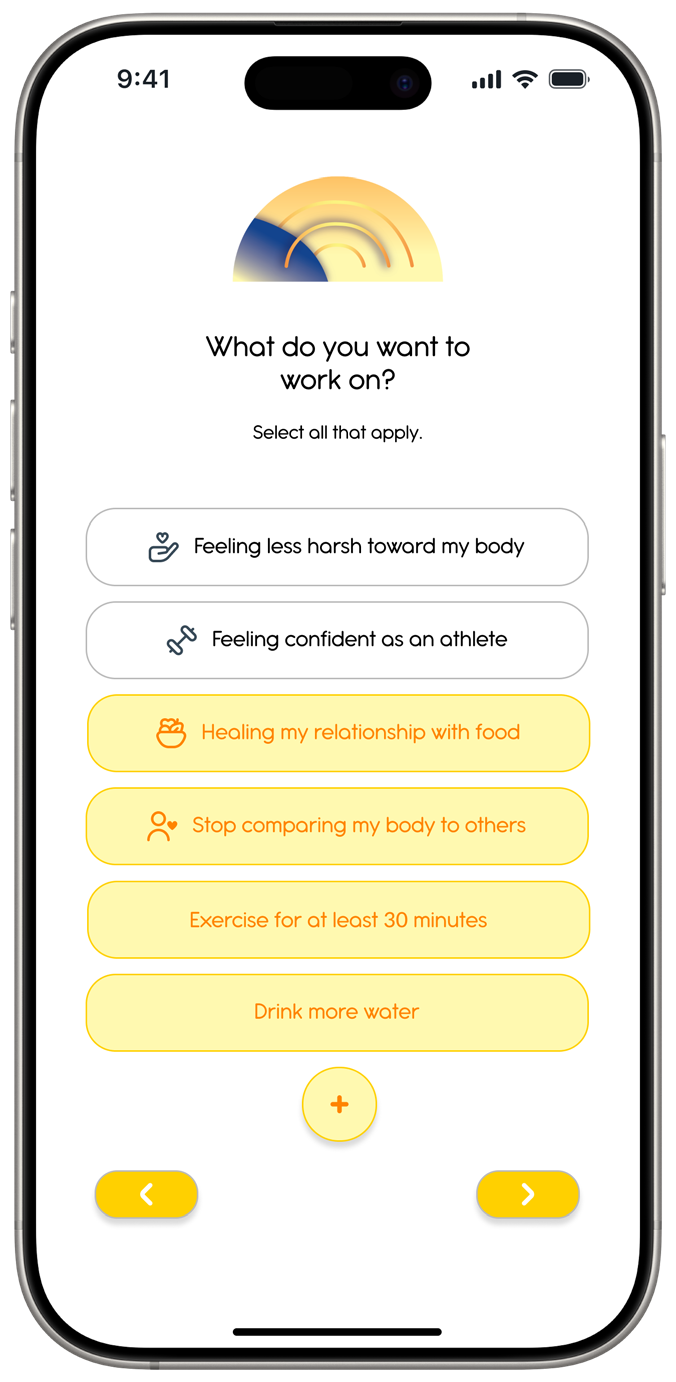
Cycle is designed to comfort users, create a stress-free experience, and focus on their emotions to help them feel better about themselves. Asking for the user’s name makes the app feel more personal and supportive, communicating in a friendly, caring way, similar to a trusted friend.
The app offers a fully customizable experience while guiding users through suggested goals that emphasize mindfulness. These suggestions act as gentle reminders of the app’s focus and values, while leaving room for specific, personalized goals that matter to each user.
Users can write more specific goals to support their progress and work toward them in a healthy, mindful way.
06 / Key design decision 02
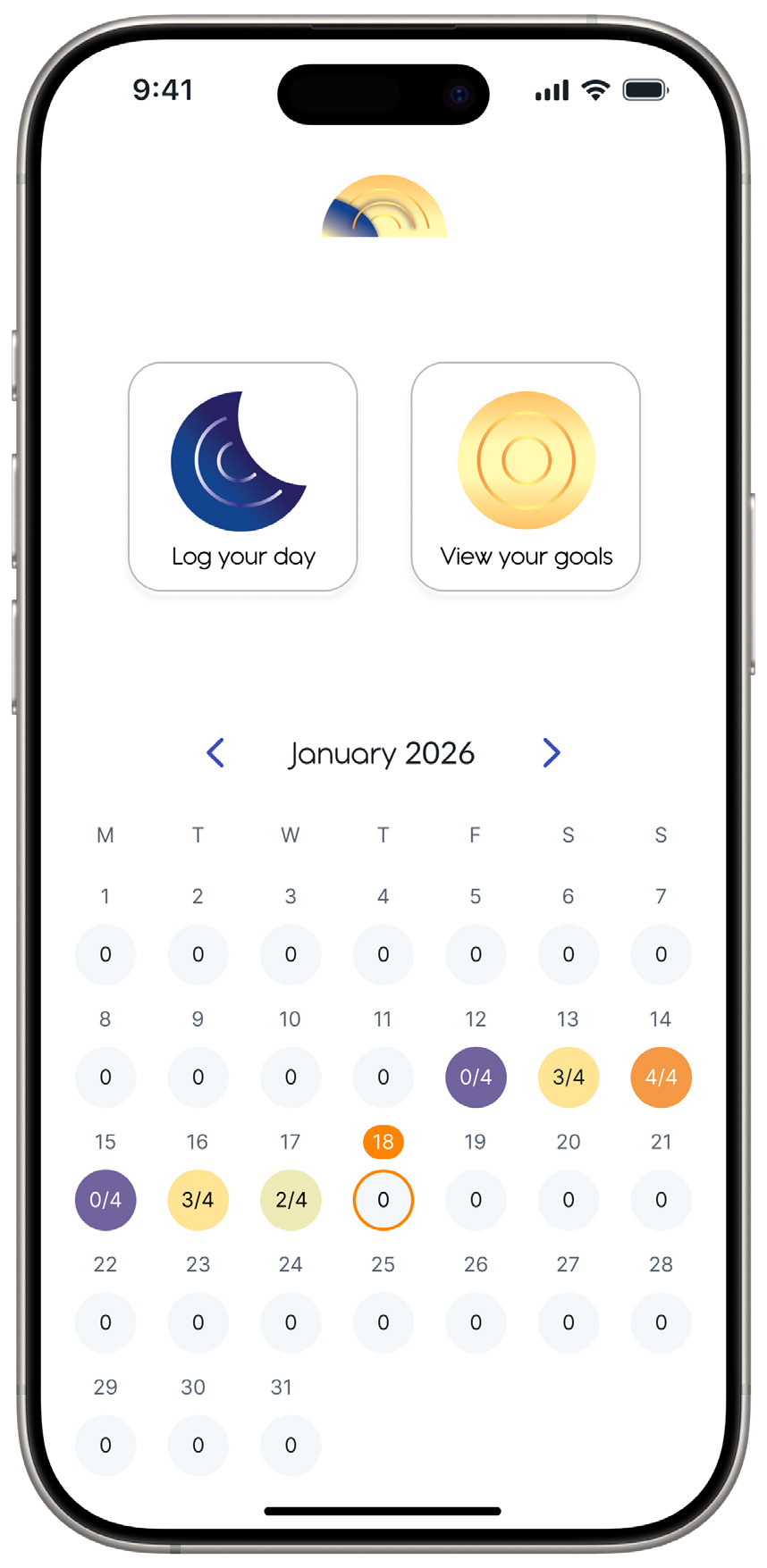
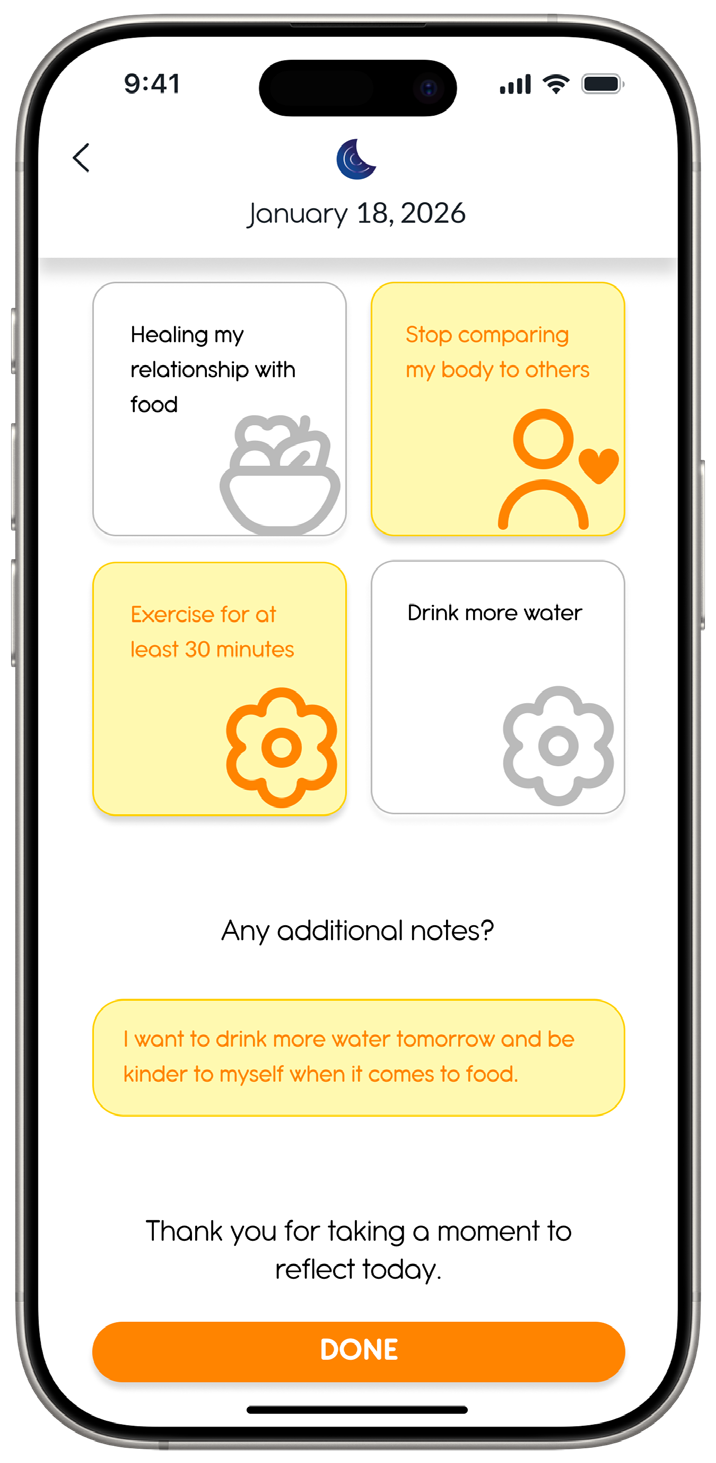
The moon icon is used at night to complete a daily reflection, while the sun button lets users check and update their goals. The logo and page design are intentionally simple and clean, helping tasks feel approachable rather than overwhelming.
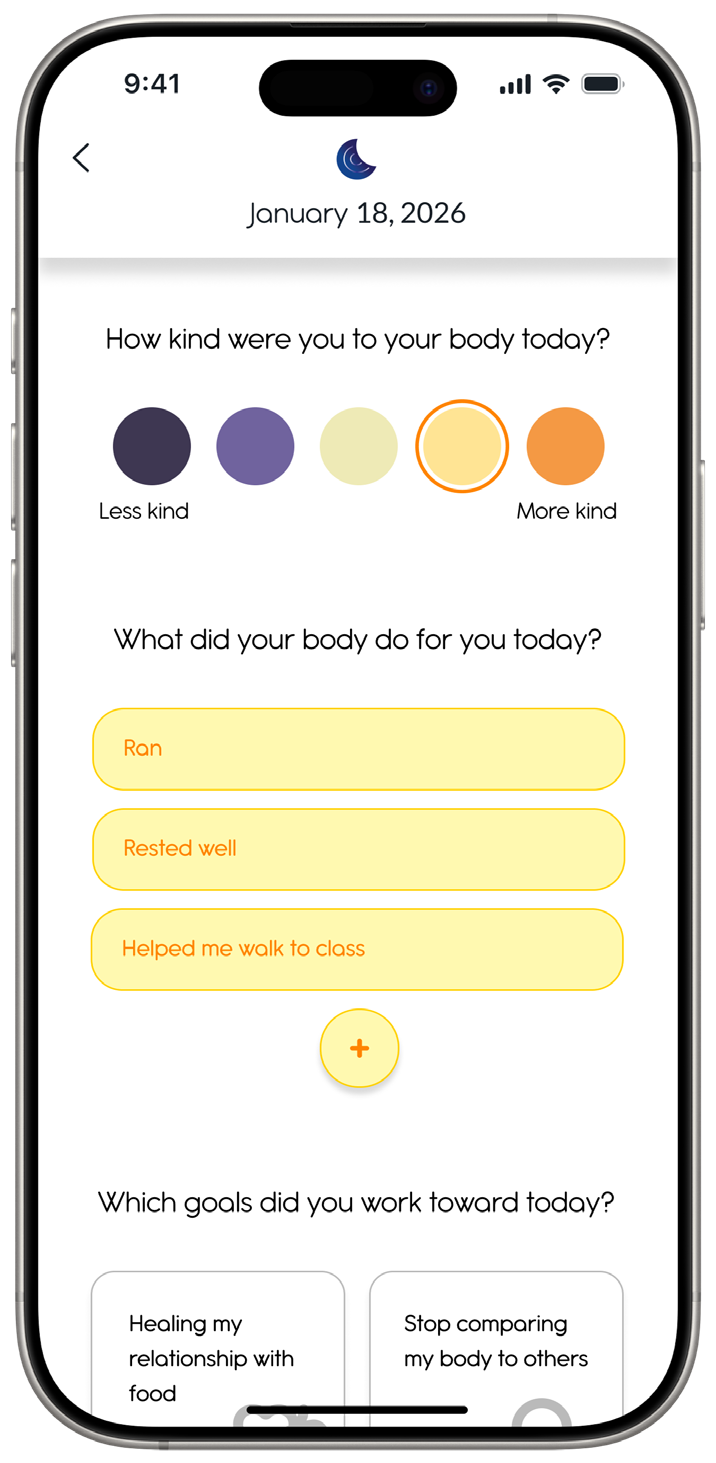
The questions encourage users to think about their body in a thankful way. Instead of asking, “What did I do today?” the app asks, “What did my body do for me today?”
The buttons are purposely large so that selecting a completed goal feels satisfying: the action fills more of the screen. Friendly icons add a sense of warmth.
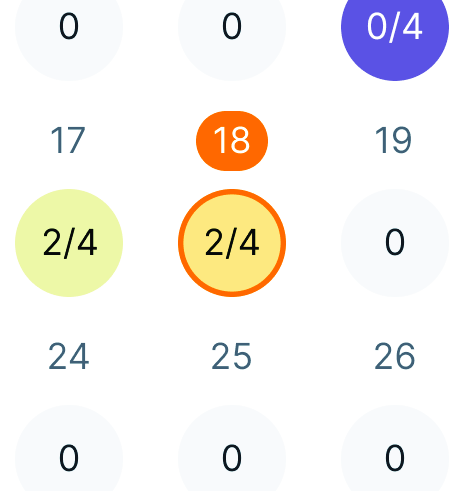
Today’s date is outlined in orange to make it easy to recognize. A zero without a fraction means the reflection was not done that day.
After a reflection is filled out, a fraction shows how many goals were accomplished, and a color represents how kind the user was to their body. Looking back at the month, users can see how they were doing through the colors.
07 / Key design decision 03
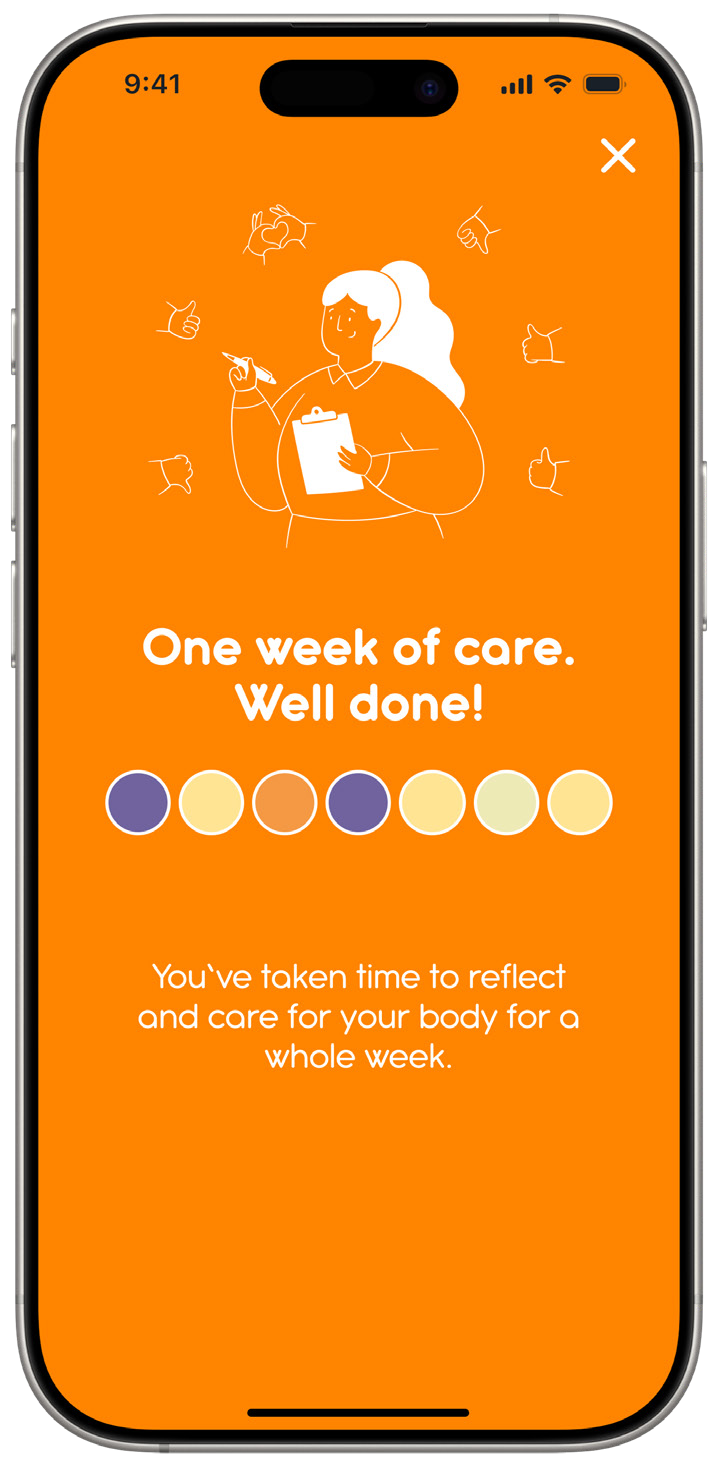
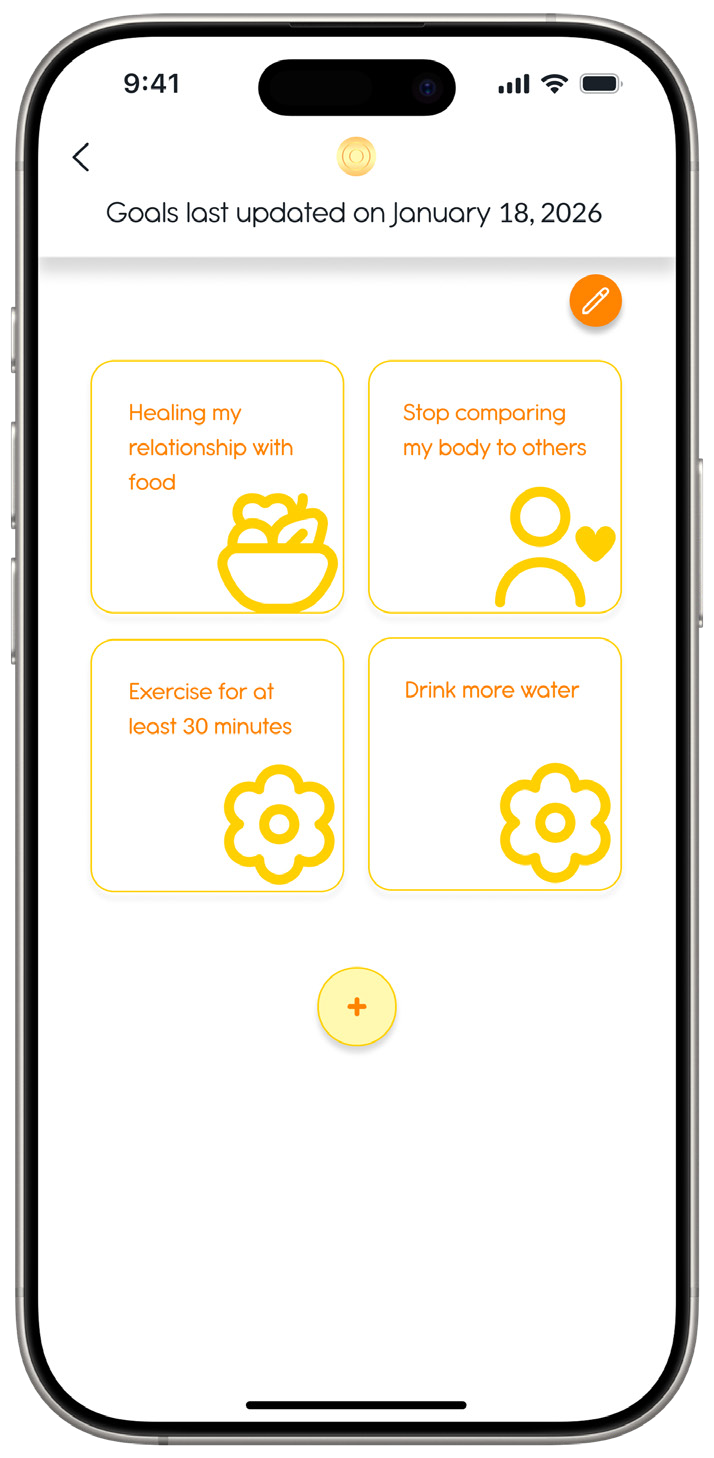
The completion screen celebrates one week of reflection, emphasizing consistency and care through positive messaging.
Users can view, add, or edit their goals. Bright pastel yellows and illustrations make the app feel friendly.

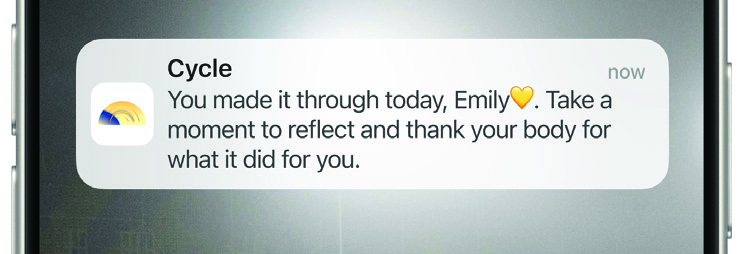
The notifications help users start their day in a bright and positive way and end it with a friendly reminder to reflect.
How might we support individuals in building confidence through personal progress while creating a safe and low-pressure space for reflecting on body image experiences?
Personalized mindful goals, daily reflection, a color-based calendar, and supportive messages bring Cycle’s focus back to self-perception and personal progress rather than appearance.
yoolim@umich.edu← Back to all work